
Miranda rights
Miranda rights are the warnings police must give before questioning a person in custody: you can stay silent, what you say can be used as evidence, and you can have a lawyer. The warnings only help if you use them. Say clearly that you want to remain silent and that you want a lawyer, then stop talking.
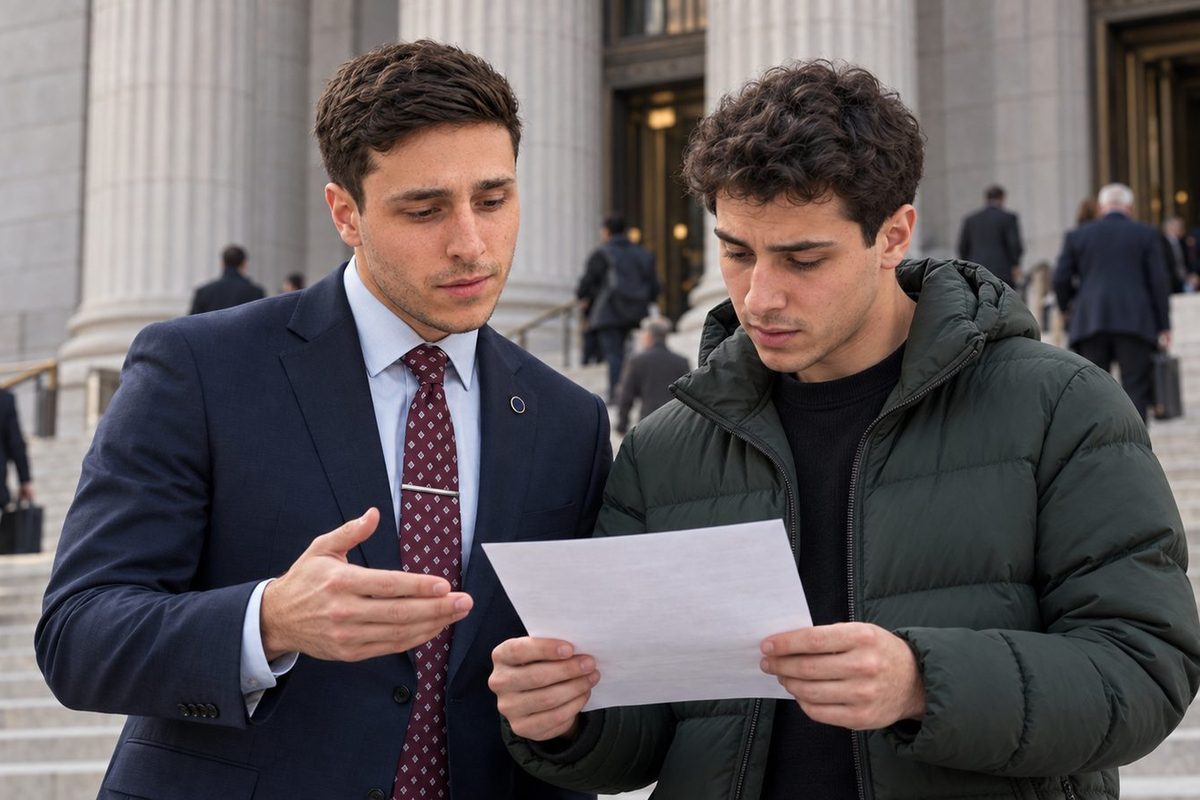
The warnings
Before custodial questioning, police must warn the person of the right to remain silent, that anything said may be used as evidence, and of the right to have a lawyer present, retained or appointed [1]. They come from Miranda v. Arizona, a 1966 Supreme Court decision. Behind them is the Fifth Amendment: no person may be compelled in any criminal case to be a witness against himself [2].
Notice the word "custodial." The warnings are tied to questioning while a person is in custody [1]. A conversation at your door, a phone call from a detective or an interview you agree to may come with no warnings at all. The safest rule is the same everywhere: do not talk about the case without a lawyer.
How to use the rights
Say this, then stop
"I want to remain silent. I want a lawyer."
- If you say, at any time, that you want to remain silent, the questioning must stop. If you say you want a lawyer, it must stop until a lawyer is present [3].
- Once a person in custody asks to deal with police only through a lawyer, police may not question them further until a lawyer is made available, unless the person starts the conversation [4]. So do not start one.
- Say it out loud. The rights must be invoked clearly, and in one Supreme Court case, staying silent during questioning did not by itself invoke the right to remain silent [5].
"I think maybe I should get a lawyer" is not as clear as "I want a lawyer." Use the plain words.
Common mistakes
- Answering "just a few" questions after the warnings, then asking for a lawyer.
- Asking for a lawyer, then starting to talk again on the way to the precinct.
- Talking about the case on a jail phone call. Assume every call is recorded.
- Talking to someone in the holding cell. They are not your lawyer.
Your rights at the first court dates
Some courts repeat part of the warning at the first court date. Here is what the rules say about those first dates.
Florida
At first appearance the judge must tell you that you do not have to say anything and that anything you say may be used against you, and that you have a right to a lawyer [6].
Federal court
At the initial appearance on a felony, the judge must tell you about the right to a lawyer and the right not to make a statement [7].
New York, New Jersey and Pennsylvania
In New York you have a right to a lawyer at the arraignment and at every later stage [8]. In Pennsylvania you are told of the right to a lawyer at the preliminary arraignment [9]. In New Jersey, if the prosecutor asks the court to hold you until trial, you have the right to a lawyer at that detention hearing, appointed if you cannot afford one [10]. The details are on the arraignment page.
For what happens next in your court, use What happens next, or see New York, New Jersey, Florida, Pennsylvania or federal court.
Common questions
The police never read me my rights. What happens now?
Tell your lawyer exactly what was said and when, and who was there. What it means for your case depends on the facts, and it is something your lawyer looks at closely. Do not discuss it with anyone else.
I already talked before I asked for a lawyer. Is it too late?
No. Stop now and ask for a lawyer. Do not try to fix or explain what you said. Tell your lawyer what you said, as exactly as you can remember it.
Sources
- Miranda v. Arizona, 384 U.S. 436 (1966). Current as of November 11, 2026. Official text
- U.S. Const. amend. V. Current as of November 11, 2026. Official text
- Miranda v. Arizona, 384 U.S. 436 (1966). Current as of November 11, 2026. Official text
- Edwards v. Arizona, 451 U.S. 477 (1981). Current as of November 11, 2026. Official text
- Berghuis v. Thompkins, 560 U.S. 370 (2010). Current as of November 11, 2026. Official text
- Fla. R. Crim. P. 3.130(b)(1). Current as of November 11, 2026. Official text
- Fed. R. Crim. P. 5(d)(1). Current as of November 11, 2026. Official text
- N.Y. Crim. Proc. Law § 180.10 (rev. 2017-03-03). Current as of November 11, 2026. Official text
- Pa. R. Crim. P. 540(F). Current as of November 11, 2026. Official text
- N.J.S.A. 2A:162-19(e)(1) (P.L.2014, c.31, § 5). Current as of November 11, 2026. Official text
Arrested, or think you might be? Call before you answer any questions.
Call and tell us who was arrested or contacted and where the case is. A lawyer will tell you what happens next and what to do tonight. Please do not type what happened into a form or an email. We will talk about it on the phone.